
4 takeaways from the final debate between Susan Collins and Troy Jackson

Maine Senate Debate in Bangor Draws Strong Reactions and Heated Exchanges
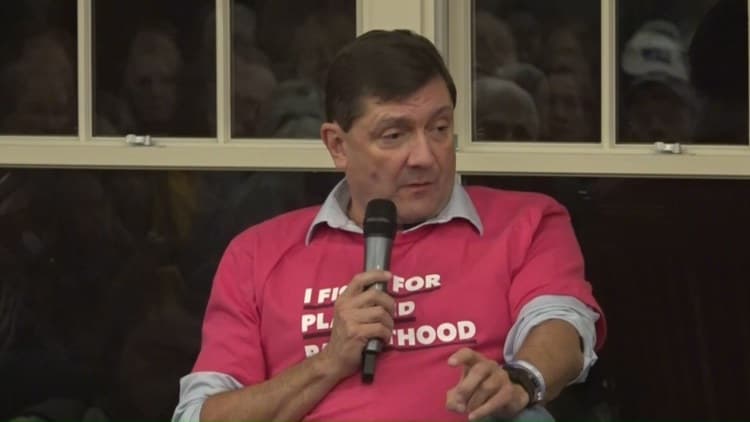
Bangor, Maine – On Thursday night, the final debate of the 2026 U.S. Senate race was held at the Gracie Theater on Husson University’s campus. The event, attended by a live crowd invited by each campaign, featured Democratic state Senate President Troy Jackson and Republican incumbent Susan Collins. The two lawmakers tackled a range of hot‑button topics—including gun control, the Supreme Court’s structure, and campaign finance—while a brief interruption from a protester added drama to the evening.
A Live Audience, a Brief Interruption
About fifteen minutes into the debate, a young man in the audience shouted about data centers, prompting the moderator to pause. Security escorted the individual—who was wearing a press badge—out of the theater. “That’s obviously one of Troy’s supporters,” Collins quipped, while Jackson cut in with, “Oh shut up. I don’t even know that kid.” The press badge turned out to be a forged Bowdoin Orient identification; the paper’s executive editor later confirmed that no Orient reporter was present.
Campaign Finance Under the Microscope
When each candidate was given the floor to ask the other a question, Collins targeted Jackson’s pledge to refuse money from billionaires and corporate political action committees. She pointed out that Jackson’s campaign has run joint advertisements with the Democratic Senatorial Campaign Committee (DSCC), which has received contributions from 28 billionaires and 190 corporate PACs. Jackson, taken by surprise, initially confused the joint ads for independent super PACs, which he could not coordinate with. He admitted that he does have billionaire donors but said, “I don’t owe (them) my votes. I’m going to tax those billionaires when I get the U.S. Senate.” He also announced that he would donate $15,000 from oil and pharmaceutical lobbyists to charity.
Collins, meanwhile, emphasized her own financial record, noting that her seniority has brought roughly $1.5 billion in federal earmarks to Maine in recent years and that she has distanced herself from former President Donald Trump.
The Supreme Court Debate
Jackson argued that the Supreme Court needs reform, supporting term limits, enforceable ethics standards, and even adding more justices to curb what he sees as a “billionaire class” influence. Collins disagreed, saying that expanding the number of justices would undermine the Constitution’s intent and turn the Court into a political body. When the moderator pointed out that the Constitution does not specify nine justices, Collins maintained that the existing structure is consistent with the founding vision.
Guns and Gun Laws
The two senators exchanged differing views on firearms. Collins defended the 1990s assault‑weapon ban, accusing Democrats of allowing it to expire to pursue broader gun control. She said she voted for a ban on bump stocks and supports “reasonable limits” on magazine capacity, while also being open to raising the legal age for assault‑weapon purchase.
Jackson, describing himself as more pro‑gun, said he would not oppose an assault‑weapon ban but would not strip guns from law‑abiding citizens. He noted that he does not see a legitimate hunting or other purpose for assault weapons. “I don’t see a good reason for assault weapons,” he said; “You can’t use them for hunting or anything like that.”
Final Thoughts
The debate highlighted the stark contrasts between the candidates. Jackson, a 58‑year‑old former logger, framed Collins as a Trump ally and urged policy changes to address rising consumer costs. Collins, the 73‑year‑old incumbent, stressed her seniority, fiscal achievements, and distance from Trump, while defending her record on gun policy and Supreme Court reform.
The discussion took place amid a broader campaign narrative that has seen both sides touting their readiness to confront Maine’s priorities—energy prices, infrastructure, and national issues—while each campaign pushes back against the other’s positions. As November 3 approaches, the debate’s moments—especially the protester interruption and the candid exchange on campaign money—will likely remain memorable touchstones for voters weighing their options in the upcoming election.