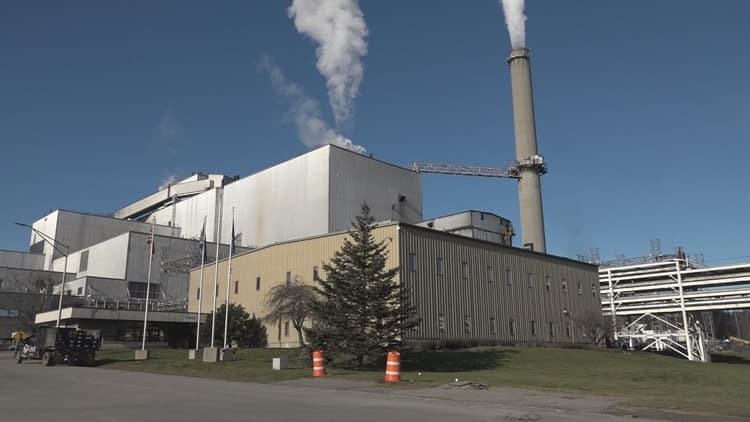

Fox News Poll: Cool your servers! Voters reject data centers

Voters Overwhelmingly Oppose Local Data Center Construction, New Poll Finds
A recent national survey has revealed deep public skepticism about building data centers in American communities, with voters opposing such projects by a 40-percentage-point margin.
According to the poll, 70 percent of registered voters oppose constructing data centers in their area to support artificial intelligence, while just 30 percent support the idea. The findings come at a time when U.S. technology companies are pouring billions into AI infrastructure to compete with rival nations.
Environmental Concerns Top the List
The survey explored why voters feel the way they do, and the answers paint a clear picture of what is driving opposition. Half of those who oppose data centers — 50 percent — cited environmental issues as their primary concern, pointing to worries about energy and water consumption, pollution, noise, and broader ecological impact.
A smaller share mentioned quality-of-life concerns (14 percent), negative economic effects (11 percent), or a general distrust of artificial intelligence (11 percent) as their main reason for opposition.
Supporters Point to Economic Upside
Among the minority who do support local data center construction, the motivation is largely economic. Sixty percent of supporters cited benefits like job creation, economic growth, community investment, and tax revenue. Another 21 percent pointed to the technology itself, calling the centers useful, necessary, or important for future progress. Just 2 percent said keeping pace with global competitors was their primary reason for backing the projects.
A Generational Anomaly
Interestingly, younger voters — often assumed to be the most enthusiastic about new technology — turned out to be the most skeptical of AI itself. Only 38 percent of voters under 30 view artificial intelligence favorably, compared with 48 percent of those ages 30 to 44 and 44 percent of those 45 and older. Yet opposition to data centers is remarkably consistent across age groups, with roughly 70 percent of every generation against building them locally.
Partisan and Demographic Divides
Support for data centers cuts along predictable lines. Voters aligned with the Make America Great Again movement are the most receptive, with 46 percent in favor. Republican men follow closely at 45 percent support. On the other end, 80 percent of liberal voters and 84 percent of white women with a college degree oppose the facilities.
Views on AI follow a similar partisan pattern. The technology enjoys 55 percent favorability among MAGA Republicans, 50 percent among conservatives, and 49 percent among men. Among Democrats, 41 percent view AI favorably, compared with 37 percent of liberals and 40 percent of women. Overall, 45 percent of voters see AI positively while 54 percent view it unfavorably — a slight improvement from earlier in the year, when the net rating was worse.
Slower and More Cautious
Regardless of how they feel about AI, nearly 8 in 10 voters say they would rather see data centers built slowly, with time taken to address environmental and community concerns, rather than rapidly to maintain a competitive edge against China and other nations. Only 2 in 10 prioritize speed.
Even so, the appetite for urgency is not insignificant in some corners. About 36 percent of MAGA Republicans and 35 percent of very conservative voters said they favor building data centers as fast as possible to keep pace internationally.
About the Survey
The poll was conducted July 17–20, 2026, under the joint direction of Beacon Research, a Democratic firm, and Shaw & Company Research, a Republican firm. Researchers interviewed 1,003 registered voters selected from a national voter file, using a mix of landline, cellphone, and online responses. The margin of sampling error is plus or minus 3 percentage points for the full sample.
Maine News Now is an independent news outlet. This article is based on a national survey and does not necessarily reflect the views of this publication.