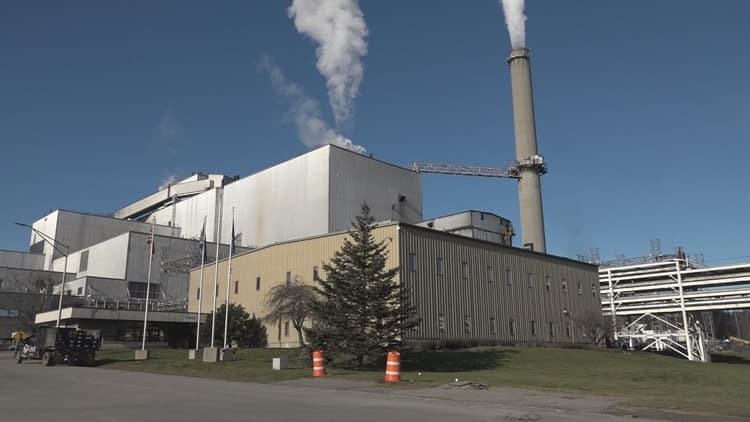

Trump-appointed judge blocks blue state's crackdown on ICE detention center

AURORA, Colo. — A federal judge has temporarily blocked portions of a new Colorado law that would have imposed stricter oversight requirements on the state's only immigration detention center, ruling that the state likely overstepped its constitutional authority.
Chief U.S. District Judge Daniel Domenico issued a preliminary injunction Thursday against key provisions of House Bill 26-1276, which Governor Jared Polis signed into law in June. The ruling halts requirements that would have mandated unannounced inspections of the Aurora ICE Processing Center at least once every three months, with the GEO Group—the private company that operates the facility under a federal contract—required to cover the costs of those inspections. The blocked provisions also included civil penalties of up to $50,000 for each refusal to permit an inspection.
In his ruling, Domenico found that GEO had demonstrated the law singled out the company for treatment not applied to any other facility.
"The extent of the additional burden is irrelevant for purposes of this test," Domenico wrote. "None of them are required to comply with HB 1276."
The judge relied heavily on the Constitution's supremacy clause, citing Supreme Court precedent that federal government activities generally must remain free from state regulation—a protection that extends to private contractors performing federal operations.
Colorado had argued the law simply brought GEO into compliance with existing state regulations applied to other detention facilities. Domenico indicated that argument might have been persuasive if the state had required immigration facilities to follow the same rules governing facilities carrying out state policies.
"But this law singles out this one category of facility for a separately defined set of restrictions and rulemaking," the judge wrote.
The preliminary injunction will remain in effect until October 15, when GEO's current federal contract to operate the Aurora center expires.
Other portions of the law were not blocked because Colorado informed the court they were not yet being enforced and would require a future rulemaking process the state said it had no immediate plans to begin. Those provisions include requirements for annual reports on detainee health conditions, disabilities, dietary restrictions, attorney access, and worship spaces, as well as mandates for onsite medical and mental health professionals and regulations regarding the housing of minors.
The ruling came one day after Colorado filed a separate lawsuit against GEO, seeking to compel the company to comply with a public health order connected to a tuberculosis investigation at the Aurora facility. Health officials confirmed an active TB case at the center on June 22.
Colorado Attorney General Phil Weiser characterized Thursday's ruling as a limited victory for GEO.
"Today's ruling granted the GEO Group a narrow, temporary injunction against one provision of a new law—not the broad relief it sought—and leaves Colorado's existing public health and safety authority intact," Weiser said in a statement. "Separately, our lawsuit filed [Wednesday] seeks to enforce that existing authority and require GEO to cooperate with the state's investigation into tuberculosis at the Aurora facility, and we will continue using every available tool to protect the health and safety of Coloradans."
The state maintains that its authority to investigate communicable diseases predates HB 26-1276 and remains intact despite Domenico's decision blocking the law's new inspection requirements.