
Would Maine’s next governor sign a moratorium on new data centers?

Maine Gubernatorial Candidates Unite on Data Center Moratorium, Breaking with Outgoing Governor Mills
As Maine prepares for its 2026 gubernatorial election, the three major candidates have taken a firm stance in favor of a temporary moratorium on new data center development—a position that directly challenges outgoing Governor Janet Mills, who vetoed such a measure earlier this year. The issue has emerged as a key point of debate, driven by concerns over the environmental and economic impacts of these massive computing facilities, especially amid the rise of artificial intelligence.
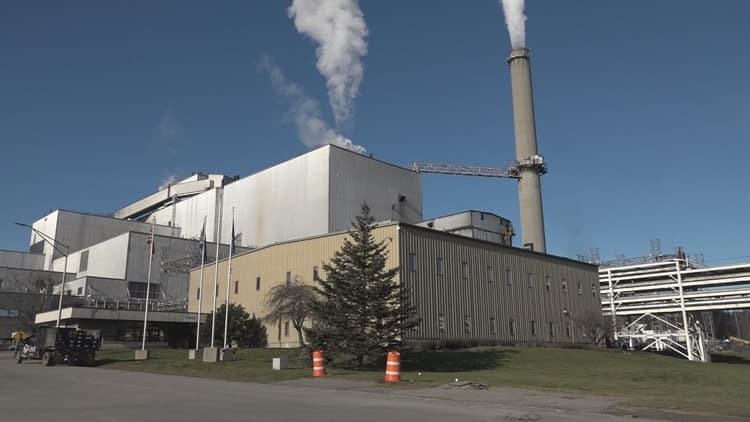
In April, Mills, who is term-limited, vetoed legislation known as LD 307 that would have imposed a near-total pause on data center projects across the state. The governor argued that the bill lacked an exception for a proposed $550 million data center at the former Androscoggin Mill in Jay, a project she said had strong community support and would “promote reinvestment and job creation at the former mill.” However, the developer, Sentinel Data Centers, withdrew its support for the Jay project in early June, leaving the initiative “on hold” and complicating the political landscape.
With the Jay project stalled and a state advisory council set to report on data center impacts by next year, the Portland Press Herald asked each major candidate whether they would sign a moratorium bill if it reached their desk. All three—Democrat Hannah Pingree, Republican Bobby Charles, and independent Rick Bennett—said they would, marking a rare area of agreement in the race.
Hannah Pingree, the clear front-runner according to recent polls, broke with Mills, her former employer of over six years, to endorse the moratorium. Pingree emphasized the need for strong environmental safeguards, citing examples from Virginia and Texas where AI-driven data centers have led to soaring electricity bills. “We’ve seen what’s happened in Virginia and Texas, where people are paying way more for electricity because of AI data centers,” she said. “I think we need some of the strongest laws in the country to make sure Maine communities are protected.” She has previously called for regulations forcing data centers to produce their own energy and addressing their high water usage for cooling.
Bobby Charles, a Leeds lawyer and the Republican nominee, also voiced support for a temporary halt. In a written statement, he said, “I would sign a temporary moratorium on data centers until more is understood about their potential impact on both electricity draw … AND their impact on water use and impact on rivers in Maine.” Charles criticized both Mills and Pingree for what he described as an “under-capitalized power grid” and recently pledged not to accept campaign contributions from data center proponents, labeling himself a “conservationist” with serious concerns about environmental impacts.
Rick Bennett, an unenrolled state senator from Oxford County, voted for LD 307 in the Legislature and reiterated his commitment to a moratorium. He stressed the need for a thoughtful approach, stating, “The state needs to take the time to thoughtfully develop rules around data centers, as they can negatively affect shared resources like water and electricity.” Bennett also hinted at dissatisfaction with Mills’ handling of the bill, saying, “I will engage early in the process, to make sure issues are addressed appropriately before they reach my desk. I believe government works best when it listens to communities and solves problems honestly, not when leaders hide behind politics or think about the next election.”
The debate over data centers highlights broader anxieties about their resource demands. Nationally, data centers consumed about 4.4% of U.S. electricity in 2023, a figure expected to double by 2028, according to a Congressional Research Service report. A single 100-megawatt facility can use millions of liters of water daily for cooling, raising concerns in communities like Sanford, where local officials recently imposed a 91-day moratorium on a proposed 1,000-acre center along the Mousam River.
With Mills departing in January and the state council’s report pending, the candidates’ unified stance signals a potential shift in policy. While their reasons vary—from electricity costs to environmental protection—all agree that caution is needed before Maine embraces the data center boom. As the race intensifies, this consensus underscores a shared desire to prioritize Maine’s communities and natural resources over rapid industrial expansion.